The Medcial Biochemistry Page Analytics

The Mucopolysaccharidoses, MPS


© 1996–2012 themedicalbiochemistrypage.org, LLC | info @ themedicalbiochemistrypage.org

The mucopolysaccharidoses (MPS) constitute a family of lysosomal storage diseases characterized by deficiencies in lysosomal hydrolases responsible for the degradation of glycosaminoglycans (historically called mucopolysaccharides). All of the MPS diseases are chronic progressively debilitating disorders that in many instances lead to severe psychomotor retardation and premature death. In addition, the clinical spectrum of these disorders can vary widely within one enzyme deficiency.

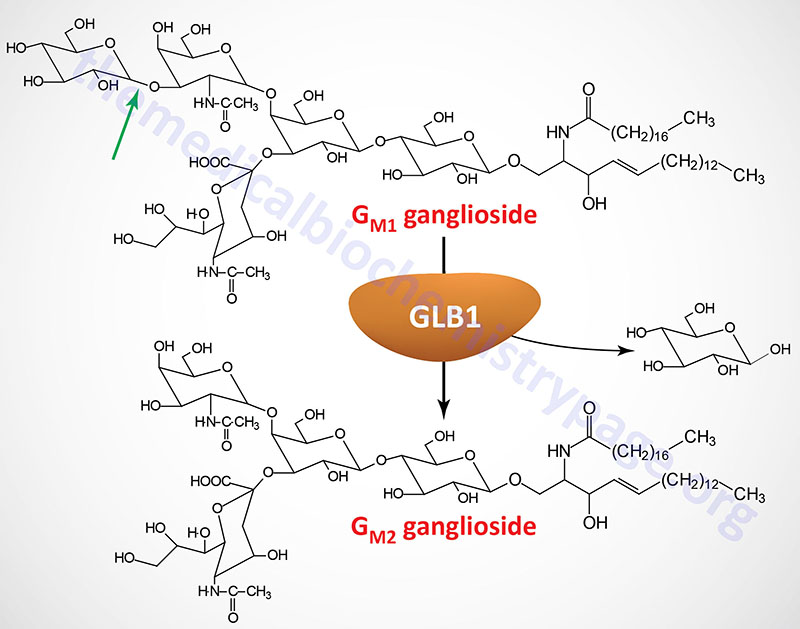
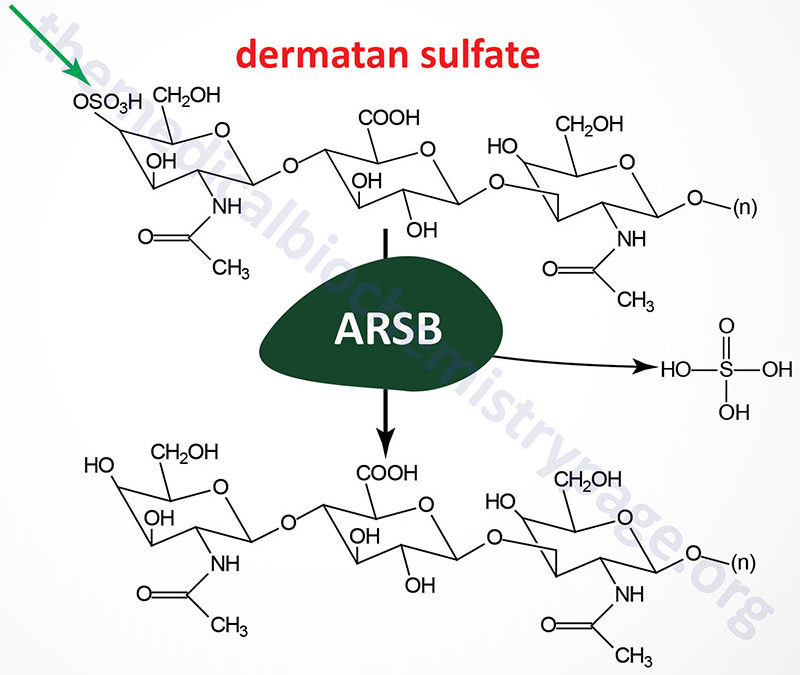
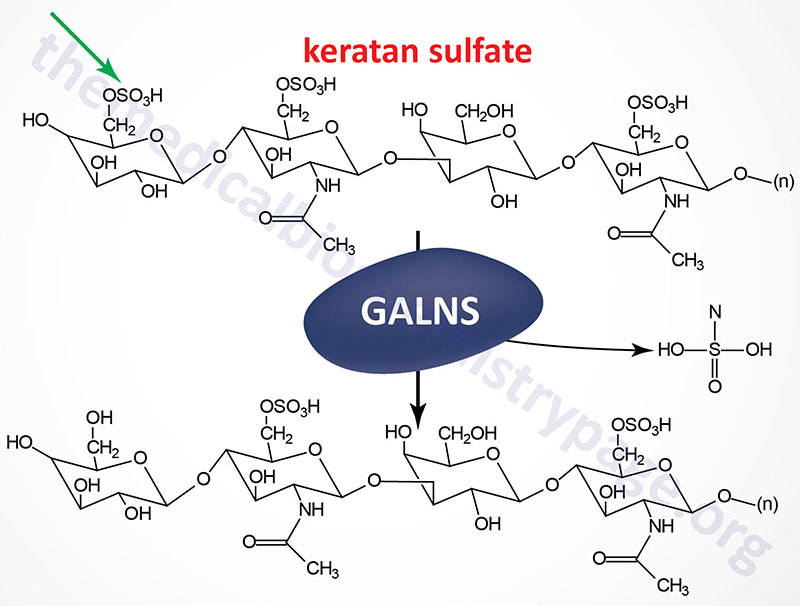
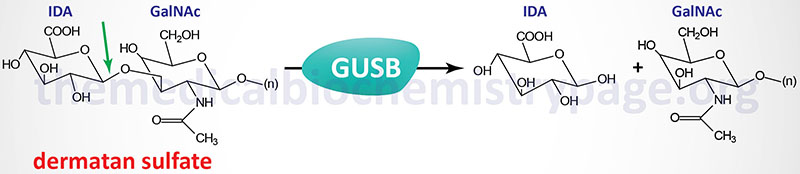
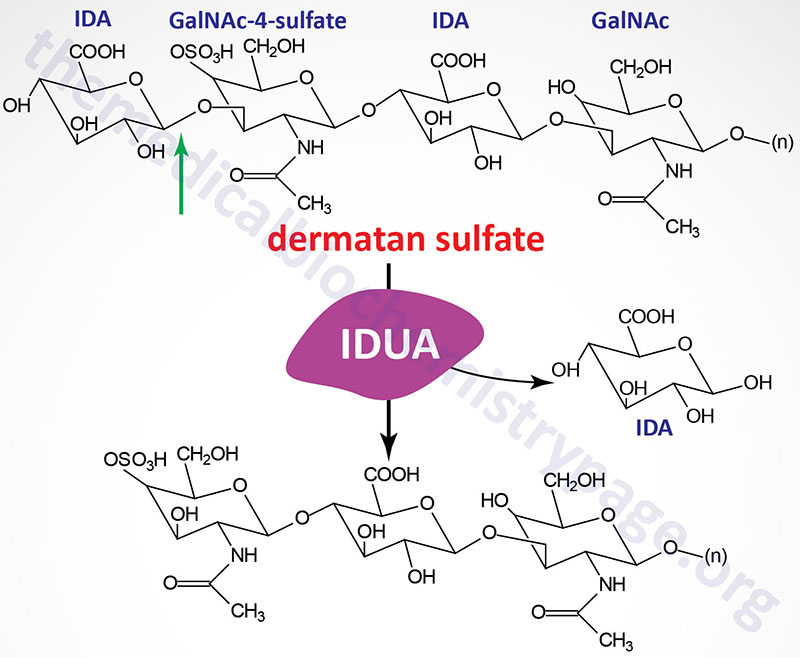
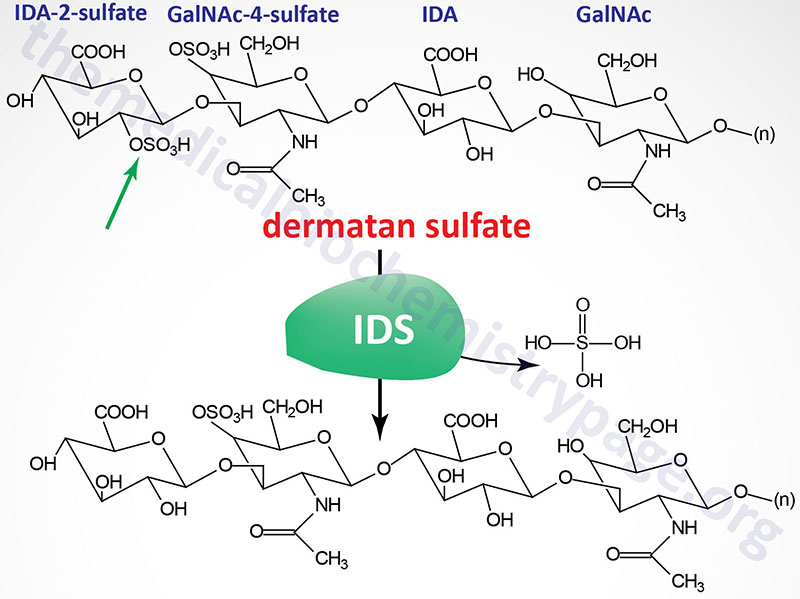
The Figure below shows the structures of heparan, keratan and dermatan sulfates as they are degraded by the indicated enzymes. The pathway for degradation of chondroitin sulfates (not shown) is similar to that of the dermatan sulfates given that their compositions are somewhat similar (they both contain GalNAc-sulfates). The removal of iduronate and iduronate sulfates is unique to the dermatan sulfates since chondroitin sulfates contain glucuronate residues which are removed by glucuronidase. Chondroitin sulfates containing GalNAc 6-sulfates are hydrolyzed by N-acetylgalactosamine 6-sulfatase (also called galactose 6-sulfatase) which is defective in Morquio syndrome type A. Enzyme names are shown in green. Defective enzyme activity leads to the disorders indicated in blue. Click the disease name in the image to go to a descriptive page. Note, for example, that although Tay-Sachs disease is a lysosomal storage disease it is not considered an MPS since a deficiency in β-hexosaminidase A results in symptoms that are principally due to defective sphingolipid degradation. However, since the β-hexosaminidases are also required for glycosaminoglycan degradation links to Tay-Sachs and Sandhoff diseases are included in the Figure.

Click here for full-size image

Pathways of glycosaminoglycan degradation


back to Glycosaminoglycans and Proteoglycans page
back to Inborn Errors Page
Return to The Medical Biochemistry Page
Michael W King, PhD | © 1996–2012 themedicalbiochemistrypage.org, LLC | info @ themedicalbiochemistrypage.org

Last modified: March 10, 2012

Vitamins and Supplements

Diabetes

A new approach to diabetes recognition and treatment

www.lef.org/Diabetes

Atherosclerosis

Unravel the biochemical processes that underlie atherosclerosis

www.lef.org/protocols/
Atherosclerosis

CoQ10

Maintain optimal coq10 blood levels with coenzyme q10 supplements

www.lef.org/CoQ10

Supplements

Life Extension offers the highest quality in supplements and vitamins

www.lef.org

Arthritis

A joint-supporting, anti-inflammatory nutrient program for arthritis

www.lef.org/Arthritis

Omega 3

Ingest plenty of Omega 3 fish oil supplements

www.lef.org/Omega-3